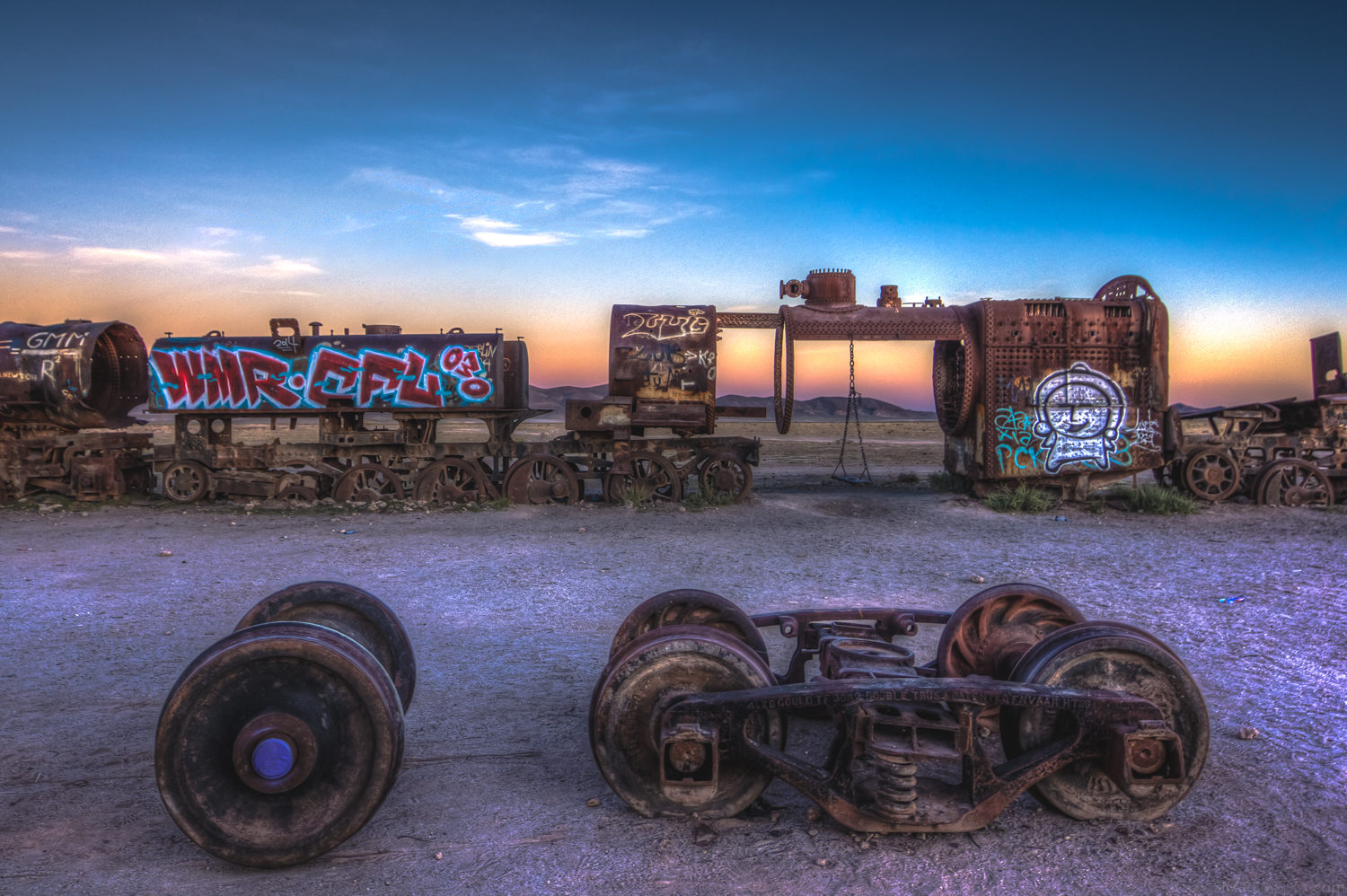
Uyuni Salt Flats, the largest salt flats in the world! Our 3 day salt flat tour began with a quick stopover in the train graveyard that we had already visited yesterday evening, however now the guide was able to explain the history behind the graveyard. The trains were built by the British and bought by Bolivia to cart the silver from the Potosi mines to a port to be exported, however because of the altitude here the trains kept malfunctioning. The problem was due to the water not boiling and being able to produce enough steam for the locomotives to make it up the mountains. This resulted in runaway trains which would derail and end up here. A solution was eventually figured out, which ironically was to add salt to the water inside the steam engines.
Stop number two was to visit a small Salt farming village on the edge of the salt flats where we did a tour of a salt factory. All of the buildings in the village were of course made of salt bricks. On the way to the salt factory we also passed a number of salt farmers readying their salt for drying on the flats. This requires the farmers to make small pyramids of salt about head height and leave in the sun to dry for two weeks.
Stop number three was at a hotel made (almost) entirely out of salt. We stopped here to have lunch then continued on to the middle of the salt flats for stop number four.
Stop number four was to take those ridiculous perspective photos. Problem being that the better the camera you have the harder it is to achieve the illusion. A DSLR just won’t work because of DOF issues and my Samsun Galaxy Note 2’s camera is too good and correctly exposes the foreground and background. To achieve the effect you need an older camera that blows out the salt in the foreground and is able to focus the foreground object/person and the background object person. We managed to get a few ok shots and then the guide had us all do some group shots which worked out pretty well.
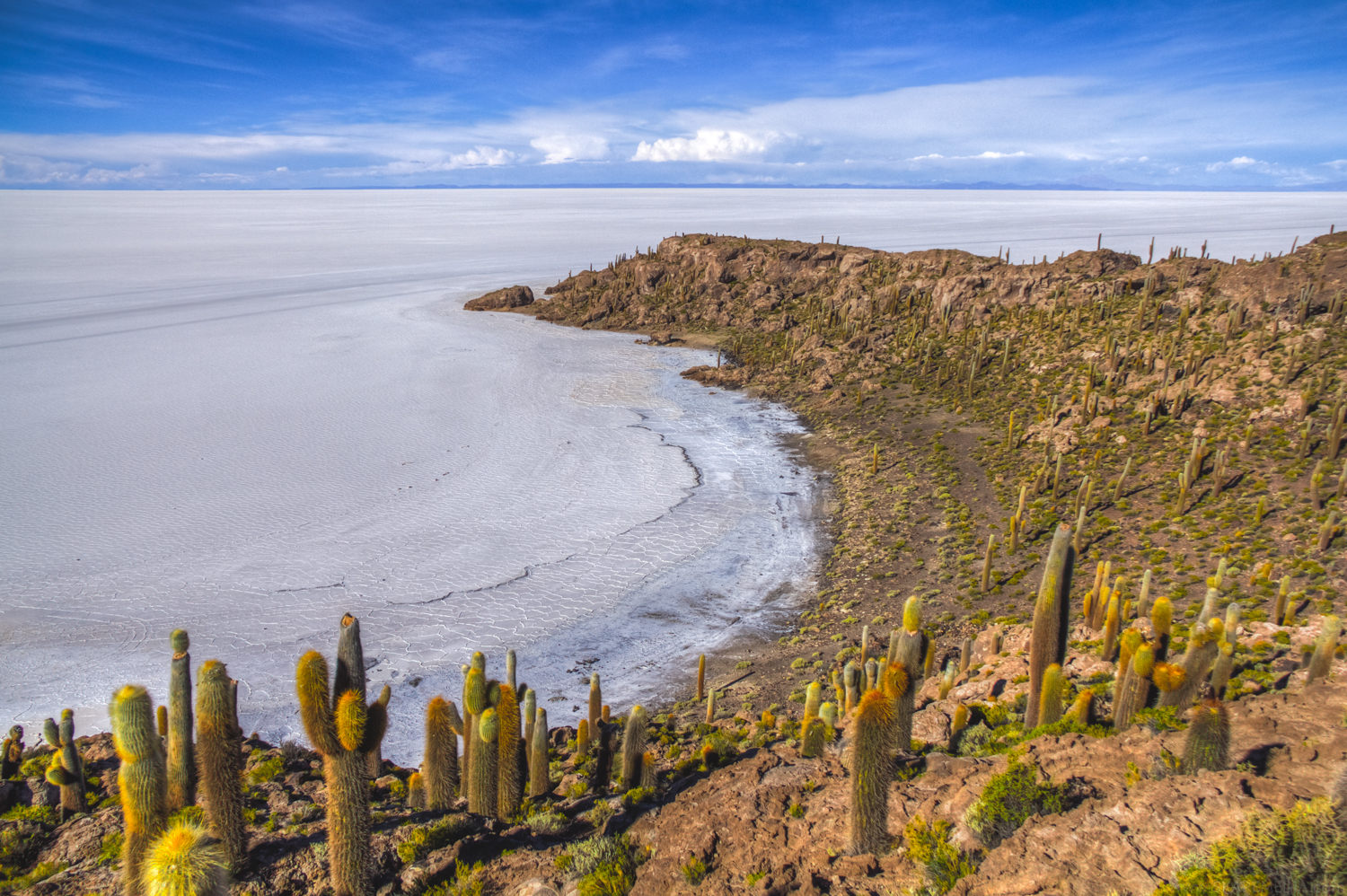
Stop number five put us on the so called Fish Island in the middle of the slat flats. The island was named fish island because the first discoverers thought it looked like a fish, however we failed to see it. The Island is covered in giant cacti which I learnt actually contain wood (I had never really thought about cacti as being trees before)! I never really thought of cacti as having wood which sounds a bit strange. We hiked around the island which gave some amazing views of the desolate salt plain all around it.
The final stop was about another 1.5 hour drive where we would spend the night in a hotel made of salt on the edge of the salt flats.